
The only way to win is to think like a scientist.
Every game stops and makes your child predict what will happen before they are allowed to play. Then it shows them what really happened, and asks again.
Designed by a UNSW Professor. Trusted by 1,200+ Australian schools.
Think Duolingo - but for real science.
You know how Duolingo turns language into a daily habit - the “just one more” Arludo does that for STEM. With one difference that matters: the game isn't quizzes dressed up with points. The game is the science. As kids play, they gain real science skills.
The science shows that building positive habits leads to better learning outcome.
Read more about great habits →5 min
A few minutes a day is enough to build the habit
3×/wk
Kids choose to come back on their own
Real
Science the whole time — not quizzes or flash cards
Gameplay clip — coming soon
Not a gamified quiz. The game is the science.
Most “educational games” bolt points and badges onto worksheets. Arludo is built the other way around: every game is designed so the only way to succeed is to think like a scientist.
Kids notice a pattern, form a hypothesis, test it, and change their mind when the data disagrees. The play isn't a reward for learning. The play is where the learning actually happens.
Our founder's research shows commercial games mostly mark who's already interested. Designed game-based learning builds the thinking. Arludo is the designed kind.
Read the research →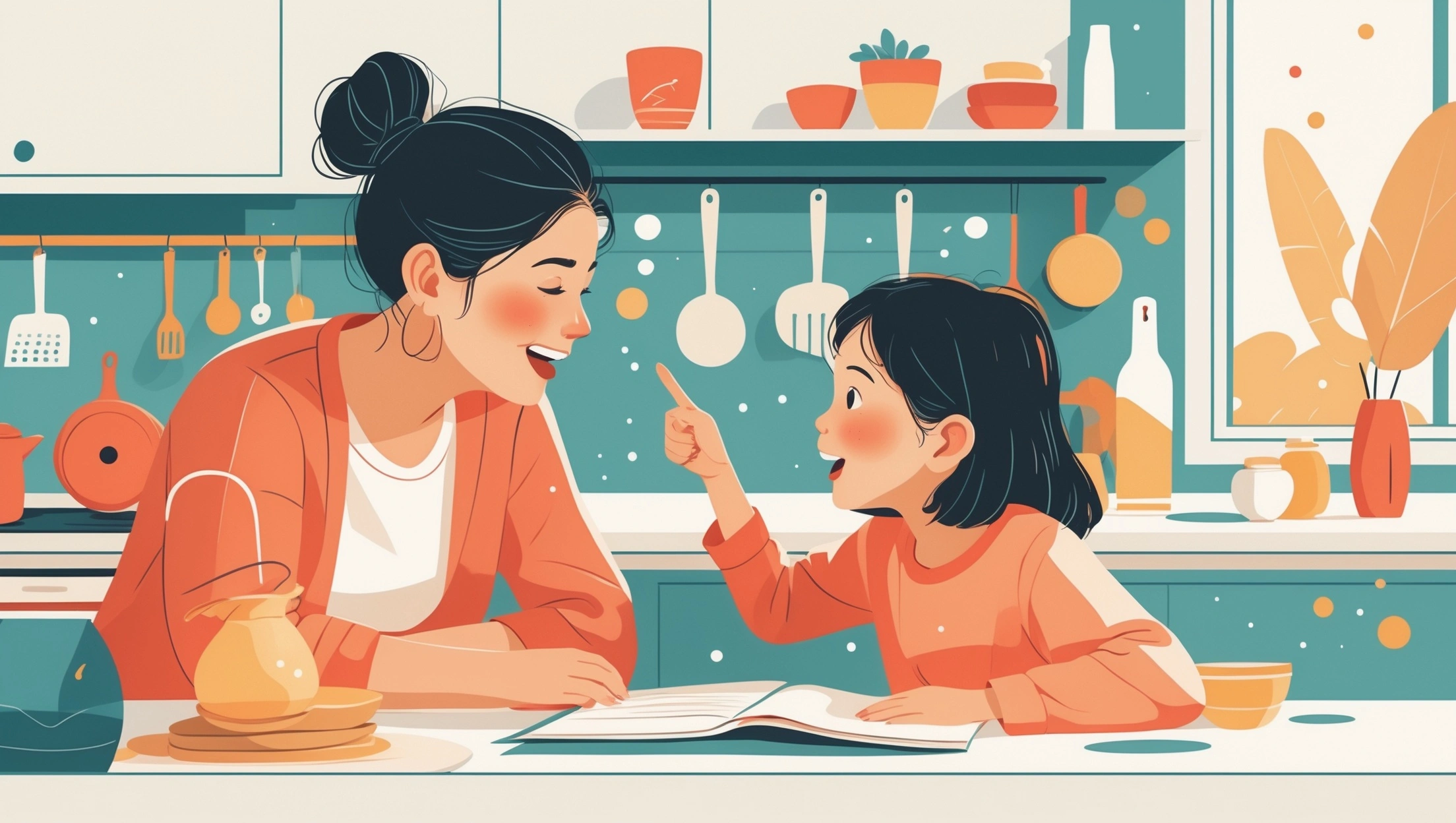
Kids discover. The conversation makes it stick.
In the game, your child discovers something surprising and real. Afterwards - at the dinner table, or in the classroom - one good question turns that discovery into understanding.
Arludo gives kids the discovery and grown-ups the questions. That loop is how learning actually happens, and it's why parents and teachers aren't optional extras: they're half of how Arludo works.
1
Game creates the discovery
Kids experiment, notice a pattern, form a hypothesis - because that's how you win.
2
Your question makes it stick
One good question turns what they discovered into something they know.
What actually happens in a lesson
Most science apps ask their questions at the end, when the answer is already on screen and guessing costs nothing. Arludo asks first, and will not let your child past until they commit.
1
Predict
Before the game unlocks, your child commits to what they think will happen. They can't skip it and they can't change it afterwards.
2
Play
They play, and the game records what actually happened — their data, not a worked example.
3
See everyone
The pooled result from every child who has played that game. Sometimes it agrees with them. Often it doesn't.
4
Predict again
A situation they have never seen. Repeating what a graph said is memory. Using it somewhere new is understanding.
There is no score. Anywhere.
Arludo does not store a mark for your child. Not a percentage, not a grade, not a running total — the field does not exist in our data, which means nobody can ever produce one. They are told when they get something right, in the moment, and then it is gone.
What is kept instead is how they thought: what they predicted, what the data showed them, and the moments they changed their mind. Changing your mind when the evidence disagrees is the most scientific thing a person can do, so we count it.
Four worlds, one habit of mind.
Every world is designed to feel like discovery, not homework.

Explore
Learning Islands
Swap for real screenshot
Explore
Short lessons where kids run experiments and test their ideas. Each island is a different scientific concept — biology, physics, chemistry, earth sciences.

Arcade
Swap for real screenshot
Arcade
Dozens of games, each teaching a new concept. The more they play, the more intuitively they understand the science. Thinking like a scientist isn't the tutorial — it's how you win.

Videos
Meet Real Scientists
Swap for real screenshot
Videos
Short clips with working scientists, engineers, and game designers from across Australia. Kids see what scientists actually look like and how they became who they are.

Challenges
Swap for real screenshot
Challenges
Structured, multi-lesson projects: investigate, design, build, submit. Full working-scientifically investigations with real submissions.
Explore
Short lessons where kids run experiments and test their ideas. Each island is a different scientific concept — biology, physics, chemistry, earth sciences.
Arcade
Dozens of games, each teaching a new concept. The more they play, the more intuitively they understand the science. Thinking like a scientist isn't the tutorial — it's how you win.
Videos
Short clips with working scientists, engineers, and game designers from across Australia. Kids see what scientists actually look like and how they became who they are.
Challenges
Structured, multi-lesson projects: investigate, design, build, submit. Full working-scientifically investigations with real submissions.
Explore
Learning Islands
Swap for real screenshot
Every world, the same habit of mind — thinking like a scientist.
See inside the app →The science behind the platform
Built on a decade of research — and it shows in the data.
Arludo was created by Professor Michael Kasumovic, an evolutionary biologist at UNSW Sydney, and grew over ten years in real classrooms. In Arludo's own data, children don't just play — they apply and self-correct real science (99% apply the physics of friction in what they build), and boys and girls learn equally.
App data from early cohorts — learning-applied measures, not test-score outcomes. We do not claim games raise test scores or cause STEM career choice.
Read the research →1,200+ Australian schools · from Darwin to Hobart and Sydney to Perth
“I used to feel guilty every time I handed over the iPad. This is the screen time I actually feel good about — she comes off it telling me what she worked out.”
“The weekly questions are gold. My son actually explains his experiments at dinner now — I've never seen him this into science.”
“It's not another points-and-badges app. He's genuinely reasoning things through — and he begs to play it.”
“Even the kids who say they hate science are hooked. They're forming hypotheses without me having to ask.”
“I can see who's getting it live on the dashboard — it's assessment without the marking pile.”
“No logins, no installs — they open a browser and they're doing real science with their own data. It just works.”
Where would you like to start?
For families
See what your child discovers, and get the questions that turn it into dinner-table conversation. Free to start.
For families →For teachers & schools
Real science your whole class wants to play — no prep, no marking. Free 30-day trial.
For teachers →